Friday, July 17, 2015

Choosing a Canvas: Books

We’ve all had a time when we went with high expectations to see a movie. As the opening scene appeared, however, we felt a twinge of disappointment, which repeated itself throughout the whole showing, and at the end, led us to say, “The book was better.” Of course, by the phenomenon of nostalgia this could be simply because we read the book first, but it could also be because the story really does work better in written form. If we allow ourselves to experience stories in many forms, giving ourselves a broad perspective, it becomes obvious that the right medium must be chosen to tell any story, whether it be a book, a movie, a video game, or a play. That is why I started this new series called Choosing a Canvas, in which I’ll pick a storytelling medium and discuss its unique features and drawbacks and what kind of stories are best told in its form. The topic of today is books.


When I pick up a book, it feels to me like I’m holding a treasure in my hands, its hundreds of pages containing an accumulation of someone else’s imagination, creative thoughts and ideas, emotional wellsprings, currents, and tides. Before I even lift the cover I feel it, as if the magic aura of the story has seeped out from between the pages and osmosed through the skin of my hands into my body. Though I sometimes have similar types of experiences when I hold other forms of story, such as movies or video games, none is nearly as significant as what comes from holding a book.

A book uses only words, which is both its greatest drawback and its greatest strength. Words cannot show you with sights or sounds what is happening like a movie does, but they can paint the picture in your imagination. Words are not restricted to these two perceptions, but can present touch, smells, thoughts, and even emotions, not only in the meanings of the words, the sentences and contexts they are found in, but also at a deeper level in the subtleties between the lines. The specific sounds chosen can set the stage, the mood molded by writer’s word the way a melody breathes, or rises, or roars like a raging typhoon whipping through your core. Words are the single major tool books can use, and the best books wield that tool with the power to shake the earth.


 A book is easy to take with you. Books have no sound, so even though it is easy to get lost in their worlds of imagination, a tiny part of your mind is able to remain aware of your surroundings so you can react appropriately to things happening around you. By using bookmarks, you can stop and start whenever you want, as well as keep track of the places of quotes you want to remember. Books last longer than movies, giving you time to take in each scene, and allowing for fleshed-out descriptions and explanations. You can read a book at your own pace, taking extra time to savor a scene that resonates with you, or to try to figure out if the part you are reading is foreshadowing something. You can also skim over the parts that bore you.

The stories that work best as books are stories that focus on the emotions, thoughts, and experiences of the main characters, as words can craft an empathetic bond between reader and character like nothing else can—not even music. Medieval fantasy works very well in the form of books, partly because books would have been the only medium available to record the stories in the time period which they take place, and partly because fantasy is usually built upon a system of magic, which is founded in an emotional-spiritual basis.

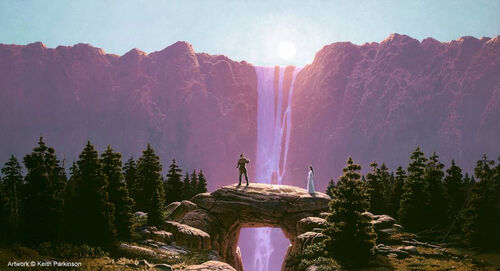
Cover art of Wizard's First Rule, by Terry Goodkind
I have found some of my favorite, most emotionally-touching, thought-inspiring stories in books, namely The Kingkiller Chronicle by Patrick Rothfuss, and Mistborn and The Stormlight Archive by Brandon Sanderson. I also enjoy many of the Star Wars Legends books that take place after the movies. As a child, I read many 100-200 page books, including young adult versions of classics like 20,000 Leagues Under the Sea by Jules Verne and The Time Machine by H. G. Wells. I have also found gems like The Phantom Tollbooth by Norton Juster, and The Hitchhiker’s Guide to the Galaxy by Douglas Adams. Books have given me so much pleasure, joy, and food for thought that I have made it a goal of my life to publish at least a few science fiction novels, built upon the knowledge I have gained training as a scientist. Though a picture may be worth a thousand words, a book is worth a thousand pictures.

Choosing a Canvas:
Books
Video Games

Friday, July 10, 2015

There Could Be a Star Wars-Scale Galactic Republic in the Milky Way

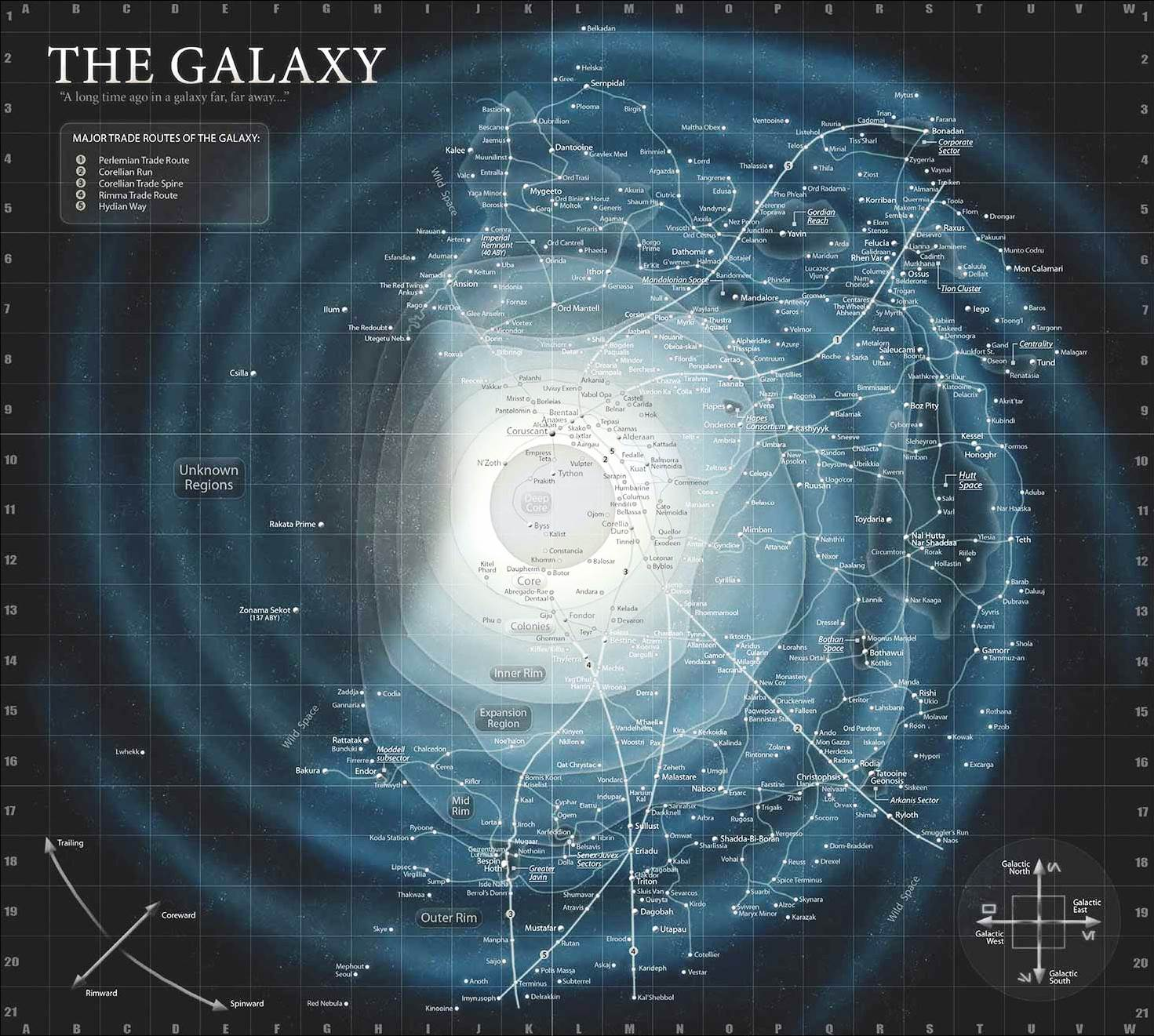
According to legend, the events of Star Wars happened a long time ago in a galaxy far, far away. But what if I told you that there could be a Star Wars-scale galactic republic right here in our own Milky Way galaxy?

See that blank spot on the left? That could be us.
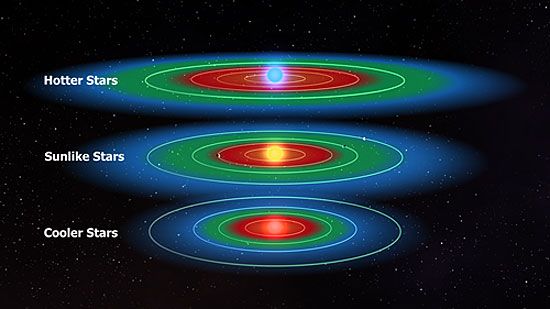
If there were a civilization spread throughout our own galaxy, you might think we would have noticed it by now. After all, such a civilization would be zipping around through hyperspace, sending messages, and all-around being busy doing things that intelligent life does. Surely if we with our present-day technology can figure out the age and size of the entire universe, we should know our own back yard pretty well. However, we really don’t; when it comes to faraway objects, the bigger something is, the easier it is to see. Even with the Hubble space telescope, besides our sun there is only one star, Betelgeuse, big enough and close enough to be resolved as a disk instead of a singular point, so we are far away from being able to see extrasolar planets directly. On the other hand, we can detect planets indirectly by observing their effects on their host stars. We all know that a star exerts gravitational force on its planet, but the planet also exerts gravitational force on the star. Both the star and the planet orbit their combined center of gravity, which is almost, but not quite, the center of the star. The motion of the star causes its light to shift frequency ever so slightly. The Kepler space telescope was designed specifically to measure these shifts, and it has found over 1,000 planets to date, but Kepler is just barely not sensitive enough to detect earth-sized planets in stars’ habitable zones, so we really don’t know how common they are.

All stars have a "habitable zone," a distance where the temperature is
right for liquid water.
Image credit: University of Nebraska-Lincoln, astro.unl.edu
To appreciate why detecting habitable planets is so difficult, we need to look at some numbers. First, the speed of light. Light goes so fast, that with a proper mirror system light could travel around the circumference of the earth 7 times in one second. The nearest star system, Alpha Centauri, on the other hand, is over 4 light years away. That means it takes light four years to get from there to here, and anything we see in that light happened four years ago. And that is only the beginning; the farthest stars in the galaxy are 75,000 light years away. It is no wonder, then, that it is difficult to find earthlike planets!

Note: from here on, I will be using order of magnitude estimation math. It is not very precise, but it is useful for hypothesizing.


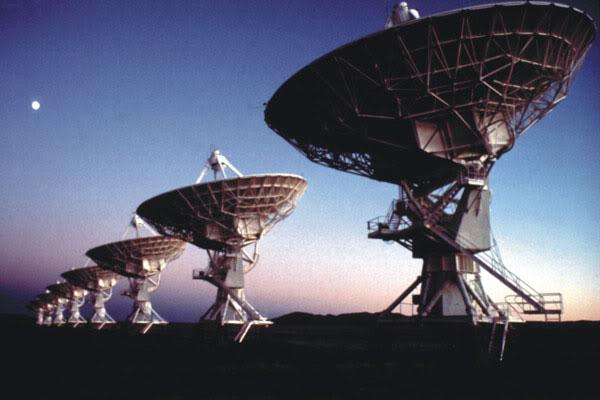
But if there are advanced alien races, we reason, we might be able to pick up their radio signals. This is the idea behind SETI, the Search for ExtraTerrestrial Intelligence, which uses a radio telescope array to scour the skies for radio transmissions from other star systems. So far, they have found nothing (if they had, you would know; it would be on every news headline around the world). Does this mean that there are no radio-broadcasting aliens out there? Not exactly. We should note that we have only been using radio signals to communicate for 100 years, and there is no telling how long an alien civilization may have been doing so. Radio waves are a kind of light, so they take as long to get to us as the distance in light years the star system they came from is. This means in order for us to detect an alien signal today, a civilization 10 light years away must have been using radio communication for at least 10 years, a civilization 100 light years away for 100 years, a civilization 1,000 years away for 1,000 years, and so on. In addition, SETI has limited sensitivity and has only been able to monitor around 1,000 stars, and only a few at one time. With SETI’s limitations it is discouraging, but not surprising that we have not found any sign of alien intelligence yet.


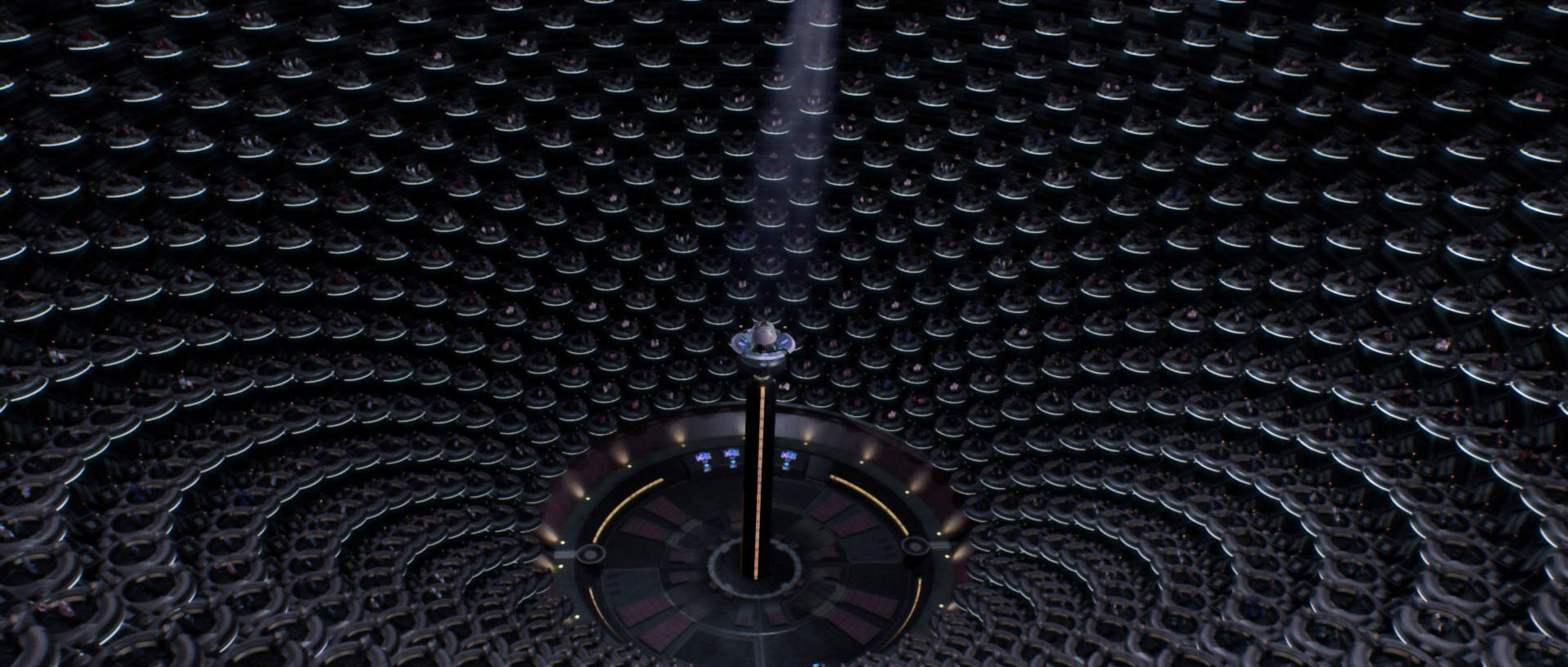
But even noting how hard it is to find habitable planets and intelligent life, we are talking about Star Wars here. Doesn’t the Republic span the entire galaxy, and therefore if it existed it would have a presence close to and around us? Not necessarily. I could not find a canonical figure for how many planets the Republic had, but sources seem to agree it was on the order of 50,000,000. Does this number work with the possible number of habitable planets with intelligent life in the Milky Way? Recall that SETI has searched over 1,000 star systems with no luck, but that only allows us to conclude that the density of inhabited systems near us is less than 1/1,000. The density of habitable planets may be much higher, and it would stand to reason that a Galactic Republic would terraform and colonize all habitable planets within reach. On the other hand, we must account for the fact that billions of stars near the galactic core are uninhabitable, so we will go with 1/1000 as the average over the whole galaxy anyway. Our galaxy has between 200 billion and 400 billion stars, so that gives us 200 million habitable planets, around 4 times more than the number of planets in the Republic. Thus a Milky Way Republic would only need to take up a fourth of the galaxy.

What about age? Could the Milky Way Republic be as old as The Star Wars Republic, yet its communication signals not have reached us yet? The Star Wars Republic was 25,000 years old by the time of the movies, so to be on the safe side let’s say that if a similar Milky Way Republic exists, the nearest planet that is a part of it would have to be over 25,000 light years away. Coincidentally, that is about as far as it is from Earth to the galactic core, the entire Milky Way being 100,000 light years across. This eliminates the region near Earth, about 1/3 of the galaxy, which leaves 2/3 of the galaxy remaining, which we estimate reduces to 2/5 when we eliminate the core. Remember, the Republic would only take up 1/4 of the galaxy, so if it is concentrated on the far side of the Milky Way, we have no problem.

Home sweet home
Despite the fact that our best efforts to search the cosmos for extraterrestrial life have so far turned up empty, the sheer size of the Milky Way and the distances between stars provide a task so great that even with our sophisticated technology we have barely been able to poke a dent in the galaxy. As such, with hundreds of millions of possibly habitable planets beyond our range of detection, it is not impossible that a Galactic Republic of the same size and age as that found in Star Wars could exist right this moment somewhere in our own Milky Way.

Friday, July 3, 2015

Four Types of Magic

Magic series:
Four Types of Magic
What is Not Science?
What if Nothing is Real?

Those of you who have been following me know by now that there are two genres of fiction that I especially like: fantasy and science fiction. Setting aside for the moment hard science fiction (or as I like to call it, true science fiction), both of these genres include incredible devices, inexplicable phenomena, and characters with extraordinary abilities. The only difference between the two genres is that fantasy claims that these are a result of something called “magic,” while science fiction insists that it is not magic. The fact that the two systems cannot be otherwise told apart is exactly what sci-fi author Arthur C . Clarke meant when he said “Any sufficiently advanced technology is indistinguishable from magic.” When I first heard this, I agreed. But within the past two years, as I was thinking about this topic, I was suddenly baffled. What was this “magic” that kept coming up, and why was it so important for characters from advanced civilizations, like the Doctor, to insist that it was not?

To find the answer, I looked at why and how writers use magic (or “I Can’t Believe It’s Not Magic”) in their stories. The general trend, I have found, is that it brings with it the deep sense of wonder and/or fear that comes with a mystery that appears to have no solution or explanation. But this sense can also be achieved by naturalistic means, by simply withholding understanding from the characters and readers. For example, when Stargate Atlantis introduces the Wraith, they appear to have supernatural abilities, but it is later revealed to be simply a feature of their biology. So why call something “magic” at all? Is it simply a cop-out, an excuse to sweep technical details under the rug? No, the idea of something called “magic” is exciting, and so doing so can be a powerful tool in story writing. So that brings us back to the original question, what is magic? As I looked at the ways various writers use the word, I have come to the realization that the reason it was so confusing is that there is a variety of different things that people mean when they say “magic.” In an attempt to break down the complexity, I have grouped magic into four types: functional, supernatural, natural, and sympathetic.

Functional Magic

In order to understand the first category, functional magic, we need to understand the relationship between function and existence. Let’s look at the difference between a real object, a cell phone, and an imaginary object of functional magic, Harry Potter’s wand. For the sake of explanation, let’s look at a function that they both have: to emit light. For the real object, the cell phone, we start at its function and ask why until we run out of answers. Why does a cell phone emit light? Because the materials that are used to make it are arranged in a specific way. Why are the materials arranged this way? Because they have properties that can be harnessed. Why do the materials have properties? Because they exist. This is as far as we can go and still be talking about a cell phone. So we have come to the conclusion that a cell phone emits light because it exists.

For Harry Potter’s wand, on the other hand, we start with existence. Why does it exist? Because it emits light (among other things). Why does it emit light? It just does; there is no further mechanism to be understood. So we have come to conclusions about both the cell phone and the wand. The cell phone emits light because it exists, whereas Harry Potter’s wand exists because it emits light. The point of importance is in the order of explanation: real objects do things because they exist, while functional magical objects exist because they do things. The world in the Harry Potter novels is full of functional magic, teeming with things that “do something, therefore they exist.” Another classic example is C. S. Lewis’s Narnia, where animals talk, a pool turns everything that touches its water to gold, rings transport you to different worlds, and witches conjure up Turkish delight out of nothingness.

Supernatural

The second category, the supernatural, is the idea that there exist two levels of reality, the natural and the supernatural (sometimes called the spiritual). The natural world follows the laws of the sciences, while the supernatural follows only self-consistency and can affect the natural world by breaking natural laws. This type of magic states that natural creatures like humans have no supernatural abilities, but there are also partially supernatural beings—like the elves and wizards in The Lord of the Rings—as well as fully supernatural beings, like ghosts, demons, and gods. If humans or other natural beings need or wish to use supernatural abilities, they must get a supernatural being to do it for them, either by petition, such as prayer, or by forceful control, usually accomplished by a summoning ritual. In some stories, humans do have supernatural abilities, but they must find a way to unlock them before they can use them.


However, the idea of a supernatural world brings a question to my mind: what really makes something supernatural? If it is defined as something that is not bound by physical laws, then what is to stop every supernatural creature from being as powerful as God? If there are limits placed upon them, then those limits are just another form of natural law, and suddenly the supernatural world is just an extension of the natural. This doesn’t stop us from using supernatural magic in our stories as long as we don’t try to go into much detail about it, but in that case supernatural magic is just a version of functional magic. This brings us to the next category . . .

Natural

Natural magic is the partial replacement of or addition to the laws of nature. If you ask why a natural magical phenomenon happens, you will get an answer. In fact, a creative writer can devise a small number of natural magic axioms, and then build a complex, self-consistent structure upon those axioms. One example would be to imagine a material that has specific, nontraditional gravitational properties, and then imagine what technologies the people in that world would develop from it. Fantasy author Brandon Sanderson is known for his many “magic systems,” or structures of natural magic, the most notable of which is found in his Mistborn novels. The technologies of many science fiction stories would fall under this category as well.

Interestingly, by our definition, the only reason the real universe does not operate on natural magic is because it is the standard against which magic is measured. The relevant factor here is that the real world exists. However, it is shortsighted to lump everything that does not pertain to us into one category, so there is no good reason why reality should be an exception when it comes to natural magic. Therefore, if we wish to have a meaningful generalization, we must either say that natural magic is not magic at all or that the real laws of nature count as natural magic. Sanderson insists that his systems are magic, and I feel no need to disagree, so it follows that physics is a form of natural magic: the magic of reality.

Sympathetic

Finally, we have sympathetic magic. For a sympathetic magic system, the world is full of consciousness. Depending on the story, a person who knows how or has the ability can extend their own consciousness to interact with this field of consciousness and do things such as move objects from a distance or communicate mentally. This type of magic can be seen in two forms in Patrick Rothfuss’s The Kingkiller Chronicle: sympathy, which is similar to what was just described; and sygaldry, the crafting of technological devices that use sympathetic principles. And of course, we cannot forget everyone’s favorite example of sympathetic magic, the Force.


So there you have it, four broad categories of how the strange, annoying little word “magic” is used. I still think that the word is too vague to be meaningful, and we would have an easier time discussing the various different things that are meant by it if we stopped using the word altogether. But who am I kidding? The real meaning of “it’s magic” in today’s society is “don’t ask, it just is how it is.” And once in a while, when you see twinkling lights in the sky or hear sleigh bells on a cold winter night, then maybe, for just a moment, that’s okay.

Friday, June 26, 2015

Star Wars Countdown I: The Phantom Menace


Star Wars is a classic of classics. When A New Hope was released in 1977, it revolutionized the entire genre of science fiction. It was soon followed by The Empire Strikes Back and Return of the Jedi. These three films panted a deep love of science fiction into many people, including myself. Then, the cinema went dark for sixteen years, until finally Star Wars graced the screens again with The Phantom Menace, followed shortly by Attack of the Clones and Revenge of the Sith. After this, it seemed like that was the end of the line for Star Wars movies, as an extensive Expanded Universe, now called the Legends Universe, had been built up in novels, comics, and video games, and another set of movies would not have fit the lore. However, When Disney bought the franchise, they found a work-around: to retcon everything that was not found in the movies and the animated TV shows and reimagine the galaxy’s future. Thus, one and a half years ago, humanity was blessed with the announcement of a third trilogy, beginning with The Force Awakens, to be released this coming December. In anticipation of this new installment, I have taken it upon myself to watch one Star Wars movie per month up to Episode VII’s release and discuss it here on A Scientist’s Fiction, starting today with Episode I: The Phantom Menace.

Notable music introduced: "Duel of the Fates"

Much anticipation awaited The Phantom Menace, as it was the long-awaited prequel to the world-rocking Star Wars trilogy. However, its release left many people with mixed feelings, and many others completely disappointed. As a seven-year-old I loved it, watching it every day for weeks with my younger brothers. Eventually we got tired of it, and stopped, and until this month I did not see it again. So now that I have matured enough to understand the plot and critique its elements, let’s take a look at some of the reasons The Phantom Menace may or may not be a good movie.

First off, we already knew what was going to happen before it began. Being a prequel, we knew how it was going to turn out, but it is more than that. There was only one surprise; most of the movie was completely predictable. It is obvious that George Lucas spent very little effort on this aspect of the movie, as illustrated by Darth Sidious, the mastermind behind everything, appearing in only the second scene. The whole theme of the movie was that there was a mystery, but knowing how it plays out before it begins kind of defeats the purpose.

The plot felt more like a checklist than a story. Manipulation of the Galactic Republic politics by Senator Palpatine aka Darth Sidious? check. The Jedi discover Anakin Skywalker? Check. Anakin does everything his son does in episode IV, but better and at a younger age? Check. Anakin meets a girl with whom he can later have said son? Check. Jedi versus Sith lightsaber duel? Check. Okay, we’re done. Much of it seemed forced, brought about by a string of incredibly unlikely events that had to have played out exactly the way they did, or Anakin would not have become a Jedi and Naboo would not have been saved. When everything that happens is a little too convenient, it loses the sense of genuineness that comes with the randomness of real life.

At the climax of the film, when the main characters are taking back the capital of Naboo, the Jedi are sidetracked by a menacing alien Sith named Darth Maul. But who was this mysterious adversary? He was given only one line in the entire movie, and absolutely no back story or reason for existence, except for the rule that there must be two Sith. For all practical purposes, he was just a bad guy with horns and a full-body tattoo. As far as villains go, Darth Maul was really pretty boring, existing only in fulfillment of his part of the checklist.

And everyone can agree that Jar Jar Binks should not have existed. Enough said.

But as I was watching, I noticed something. I felt a great sense of wonder revolving around the Jedi and the Force, amplified by the soundtrack, and I have to ask a question: should we judge this movie by standards it was not trying to fulfill? The Phantom Menace did not focus on storytelling, but rather had a different purpose altogether: apply a spiritual spin to a sci-fi world. With the Force as a mystical energy that can be used to influence reality, it starts to make sense how all of those incredibly convenient coincidences can happen. It was not supposed to feel realistic in this way. The Force is a mechanism for destiny, a recurring theme throughout all of the Star Wars movies. Darth Maul was meant to be a mysterious face of evil instead of a fleshed-out villan. He was supposed to be felt, not understood. And we must not forget to mention the soundtrack, which is every bit as epic as the original trilogy’s. All in all, I found myself taken in by the galaxy’s mystical and fantastic nature, and I enjoyed the movie a lot more than I thought I was going to. Maybe Star Wars Episode I does not deserve all the hate given to it, as it does what it intended to do—show a world permeated and guided by a mysterious Force—very well.

There is a YouTube video by Belated Media titled “What if Star Wars Episode I was Good?” where the host presents a version of the movie as if he had been an editor and George Lucas had submitted the script to him. I agree that his version would have been better. You can check it out by clicking here.

Star Wars Countdown:
The Phantom Menace

Friday, June 19, 2015

Flashing Lights, Giant Robots, and Explosions

Note: this was written before I started downloading and re-uploading the pictures I use, so some of them have gone away. Hopefully I will get around to fixing this soon.

Look me in the eye and try to tell me with a straight face that you weren’t at least a little excited when you saw this post’s title. There is something within us that starts growling, building up into a roar in response to fast motion and chaos.

If I didn't put something like this here, it would be false advertising.
Picture by Alon Chou, cool-photos.com

Of course, I am not here to talk about metal men shooting missiles at each other simply because it lends to an adrenaline rush, but rather to examine why such content is put into stories, and what purpose it serves. More generally, I’ll be talking about anything that can be put into a story to entice the audience. There are many different possible instances of this, targeting different emotions and audiences. There is action, designed to spike an adrenaline rush, igniting a flame of battle. This is what explosions, weapons, and fighting robots are used for. The audience also will get a rush with the appearance of a beloved character or actor, as well as when presented with romance, sex, tight clothing or exposed skin, and plenty of other things.

It'd be hard to imagine a movie called The Princess
Bride without a scene like this.
All of the above can be used for the sole purpose of stimulating the audience. This is called fan service. Fan service is feeding the audience something they want and are expecting, like a car chase in an action movie, a kiss in a romance, or an actor reprising his or her role from many years ago.


I have stated before that I find value in fiction in its hypothetical exploration: how the characters respond to the unusual situations they are put into, philosophical ideas that can be explored, moral dilemmas the characters have to face, etc. In fact, I used the exploration of the hypothetical as my only defense against the social stigma against fantasy, seeing it as sufficient on its own to justify immersing oneself in fiction. From this point of view, is there any significant purpose to fan service, or is it no more than fodder for our ape-like instincts?

There is one obvious purpose for fan service: it makes for eye-catching trailers. Anything that hopes to be classified as an action movie needs to have an action-packed trailer with at least one fireball explosion. Trailers are movies’ number one attention-grabbers, and the only reason they grab our attention is because they are entirely fan service. A trailer’s sole purpose is to shout, “Hey you! Look, you’ll like this movie. It will entertain you, keep you on the edge of your seat, and fill you with thrills.”

Mad Max: Fury Road went all-out with an action-packed trailer.

Now it becomes important to clearly define the boundary of what counts as fan service: material that’s sole purpose is to entice the audience. Notice that by this definition, a huge battle or a sex scene does not count as fan service if the presentation of the story or theme is more significant than it would be without. Thus, there is a very meaningful difference between fan service and non-fan-service stimuli. As biological creatures, we humans need stimulation in order for a movie to keep our attentions for the whole two or three hours. As an example of good stimulation, take a scene from Avengers: Age of Ultron (minor spoiler alert). We could have seen Bruce Banner sitting brooding in a corner while Tony stark tells the team that Hulk has just gone rampaging through a city. Instead, the Hulk’s fury was shown onscreen, no stops pulled, and we saw Iron Man in his Hulkbuster suit trading powerful blows with the green monster. This high-intensity action sequence was not simply for the audience to see big things smashing each other and the environment, though that certainly was part of it. Rather it provided an empathetic understanding of Banner’s struggle with the monster within, as well as give us perspective on one of the overarching themes of the movie, whether the Avengers are really good for the world, or if they are ultimately harmful and destructive. (end spoilers)

Used in this manner, the flashy aspect of movies can also act as a catalyst for those who go to them for entertainment, exposing them to the themes and ideas. There is a high demand these days for entertainment; people want to be stimulated, and most want to see a movie that has action or romance. Of course, most people would also claim that they care more about the story and characters, but the entertainment factor is clearly a major priority. In light of this, we see there can be value found even in movies and shows that incorporate copious amounts of meaningless fan service (ahem Doctor Who) as a means to draw attention to the themes being explored in the work. And sometimes it is okay to make fan service allowances just because. After all, the best writers are fans of themselves too.


The takeaway here is that all these things are just a subset of unlimited tools writers can use. It is up to the writers to decide what they are trying to convey by their work, and to stay true to that point throughout. Sometimes excitement works into the story really well. Sometimes giving the fans what they want works, and so it is done. And sometimes writers will make a point by blatantly avoiding fan service, like how in Patrick Rothfuss’s The Wise Man’s Fear Kvothe glosses over his trial at Imre, which the Chronicler had been anticipating the whole time, how in Brandon Sanderson’s Mistborn trilogy the main character turns out not to be the hero of ages, and how a blogger can write an entire discussion on fan service without including a picture of anime panties. It’s up to the writer to decide what his or her work is going to convey, and then use the tools at his or her disposal to make it so.

Friday, June 12, 2015

The Social Tabuu

In the course of life of every human being, there comes a time, usually in the mid teen years, when they begin to feel the disapproving eyes of society resting upon them. A pressure arises—the pressure to give up the spirit of imagination and be fully assimilated into the real world. It feels as if they have the moral obligation to grow up, to stop wasting their time on frivolous creative activities and to set their sights on something useful: a career, a family, putting to rest their fantasies for the good of society.

Nowhere can this be felt as much as in the realm of video games, the constant target of society’s optical derision. One game, though, takes up the challenge and fights back. This game is Super Smash Bros Brawl, in which many characters from all over the various Nintendo game titles come together and duke it out. In this game, there is a hidden, symbolic lore which has been speculated about since the game’s release in 2008. When loading up the game, as well as the two preceding installments of the franchise, it appears that the playable characters are toys, and that the child who owns the toys is bringing them to life with his imagination. After several minutes of battling each other, the toy characters must battle Master Hand and Crazy Hand, the hands of the child. These hands represent the creative and destructive forces of imagination.

Brawl adds another page to the mystery with a story-driven campaign called the Subspace Emissary. In it, a mysterious dark force from outside the realm of imagination invades and seeks to turn all the characters into trophies, static and motionless, never to be touched again. This represents the disapproving gaze of society on those who are old enough to be considered responsible, yet still play video games. At first, the mysterious force appears to be led by Master Hand, but it is eventually revealed that Master Hand is confined by puppet strings, held by an imposing, cross-armed, adult-shaped figure called Tabuu. The creative force of imagination Master Hand rebels against Tabuu, but is struck down almost immediately, and it is left up to the players to keep Tabuu from turning everyone into trophies, to fight the digital personification of the societal pressure to give up imagination. The ensuing boss battle is much harder than anything that has been thrown at the players so far; Tabuu is relentless, and can often knock the player out with a single strike, reflecting how heavy the pressure to conform can feel to the player. Defeating Tabuu is tantamount to taking a power stance and stating firmly to the specter wearing the guise of society, “I reject your stigmas, your prejudice, and your arrogance. I choose to live my life as myself, not as you would have me be.”

Although Tabuu specifically represents the stigma against video games, the principle applies to all forms of creativity—stories, especially fantasy, being the most relevant to me. I have personally felt this pressure many times. When I was working with a team of groundskeepers at a campground, my boss would ridicule us for talking about movies. In college once, when the physics department was socializing, I brought up the fact that I was using the knowledge I gained for the creative purpose of science fiction. One of the professors suggested I focus instead on science fact. The pressure is real, and can be difficult to stand beneath.

Of course, it is important for us to sacrifice a part of our energy to support society, which in turn supports us. This may plant a seed of doubt, causing us to wonder if perhaps society is right. Am I really wasting my life away? Is fantasy really just frivolous and useless? The answer is, like any question of value, a little more complicated than just yes or no. If you sit down to watch a few hours of TV in the evening, then you are certainly not getting the house clean, or reading papers for your research, or anything else that it is generally agreed upon is productive. But on the other hand, as I’ve said in a previous discussion, fiction explores the realm of the hypothetical, and it challenges us to think in new ways that we may not have come to on our own. Because of this, a healthy dose of fiction will help us function better when interacting with people, solving problems, and even doing practical work. In light of these benefits of fiction, if fiction is where you find most of the purpose and meaning in your life, like I do in mine, then it is ultimately counterproductive for society to attempt to enforce the Tabuu upon you. Though it may seem strange to those who do not feel its draw, imagination is an essential driving force for the success, progress, and happiness of both the individual and the human race.

Special thanks to YouTubers MatPat and Conner the Waffle for presenting this interpretation of the Super Smash Bros lore.

Friday, June 5, 2015

My Story of Physics and Fiction

Although I am passionate about stories, I am pushing for a degree in something that might look at first glance entirely disconnected from fiction in every way: a Doctorate of Philosophy (PhD) in astrophysics. I am one year into the Master’s phase, on my way to becoming a world-class expert on galaxy formation, neutron stars, black holes, galactic clusters, etc. (actually probably only a few of these; they get complicated). Physics is the study of space, time, matter, energy, and how they all interact with each other. In other words, it is the study of the basic laws that govern how the universe works. Physics is devoted entirely to what is true and what might be true, while fiction is by definition not true.

Of course, there really is no limit on fiction besides the writer’s imagination. Therefore, fiction is free to dip into the realm of what might be true. In these cases, fiction and physics do overlap in a wonderful genre that enriches both the intellect and the aesthetic sense. In the old days, this kind of fiction was called “science fiction,” though sadly the term has degraded to a stereotype of space ships, hostile aliens, and laser weapons, the science aspect all but forgotten.

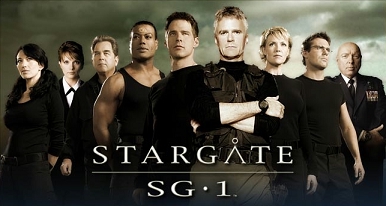
A few stories do, however, remain mostly true to the core of science-based fiction, one of which I was enthralled with as I matured into adulthood. That story was Stargate, which ran for seventeen seasons across three shows. In it, teams of heroes walk through wormholes to other planets, meeting new civilizations and fighting evil alien overlords. Its premise is very similar to that of Star Trek, but Stargate’s military perspective and serialized plot arcs make it completely unique. But it was Stargate’s strong attempt at scientific realism that kindled in me the physicist spark.


In addition to Stargate, I read and watched any material relating physics and science fiction that I could get my hands on. Among them were The Physics of Star Trek by Lawrence Krauss, and Sci-Fi Science by Michio Kaku, in which were discussed the theoretical engineering possibilities of warp drives, invisibility, teleportation, time travel, and many other fictitious technologies.


A scientific analysis of the various
technologies found aboard the USS
Enterprise.
When it came time to choose a major for college, I took one glance at the list and chose physics, stating right then and there that I was going for a PhD. I have never regretted that decision. I wrote my bachelor’s thesis on the plausibility of faster-than-light travel, and for a while I had my mind set on being the first person to invent a working warp drive. However, I have come to realize that if a warp drive is invented, it will almost definitely be centuries from now. But I have learned to love physics for what it is, not for what I used to wish it would be.

When I started college, I told everyone the reason I chose physics was to write better science fiction. Since then my focus has switched to physics for its own sake, but I have gained knowledge and a mindset that will help me write. With knowledge of astronomy, I can create realistic planets. With an understanding of particle physics, I can invent a system for artificial gravity. With a conceptualization of higher spatial dimensions, I can give my characters a reasonable means of traveling faster than light. Granted, most people probably won’t know the difference, but I care, and I want my science fiction to be enjoyable to others like me.

Physics and fiction do not have to be completely independent. Rather, they can complement each other to make something I see as more beautiful than either is alone. The dynamic between the disciplines is wondrous and complex. What I have written today is just a brief introduction, a teaser; I have a multi-article series in the works on the relationship between science and science fiction, so sometime in the future you can expect to see more Of Science and Science Fiction.

Images taken from Wikipedia.